🔔都道府県ごとに最低購入金額の条件がございます。送料はお届け先住所に応じて、チェックアウト時に自動計算されます。なお、各地域の最低購入金額に達した場合は、送料無料が自動的に適用されます。ご不明な点がございましたら、お気軽にお電話下さい-07038281274。 MINIMUM ORDER AMOUNTS VARY BY PREFECTURE, SHIPPING FEES ARE AUTOMATICALLY CALCULATED AT CHECKOUT BASED ON YOUR DELIVERY ADDRESS, AND FREE DELIVERY WILL BE AUTOMATICALLY APPLIED ONCE THE MINIMUM PURCHASE AMOUNT FOR YOUR REGION IS MET — IF YOU HAVE ANY QUESTIONS, PLEASE FEEL FREE TO CALL US-07038281274. 都道府県ごとに最低購入金額の条件がございます。送料はお届け先住所に応じて、チェックアウト時に自動計算されます。なお、各地域の最低購入金額に達した場合は、送料無料が自動的に適用されます。ご不明な点がございましたら、お気軽にお電話下さい-07038281274。 都道府県ごとに最低購入金額の条件がございます。送料はお届け先住所に応じて、チェックアウト時に自動計算されます。なお、各地域の最低購入金額に達した場合は、送料無料が自動的に適用されます。ご不明な点がございましたら、お気軽にお電話下さい-07038281274。 🔔


 Basmati Rice
 Sauce
SauceWhat to Eat at Iftar for Full Energy During Taraweeh – A Complete Nutrition Guide

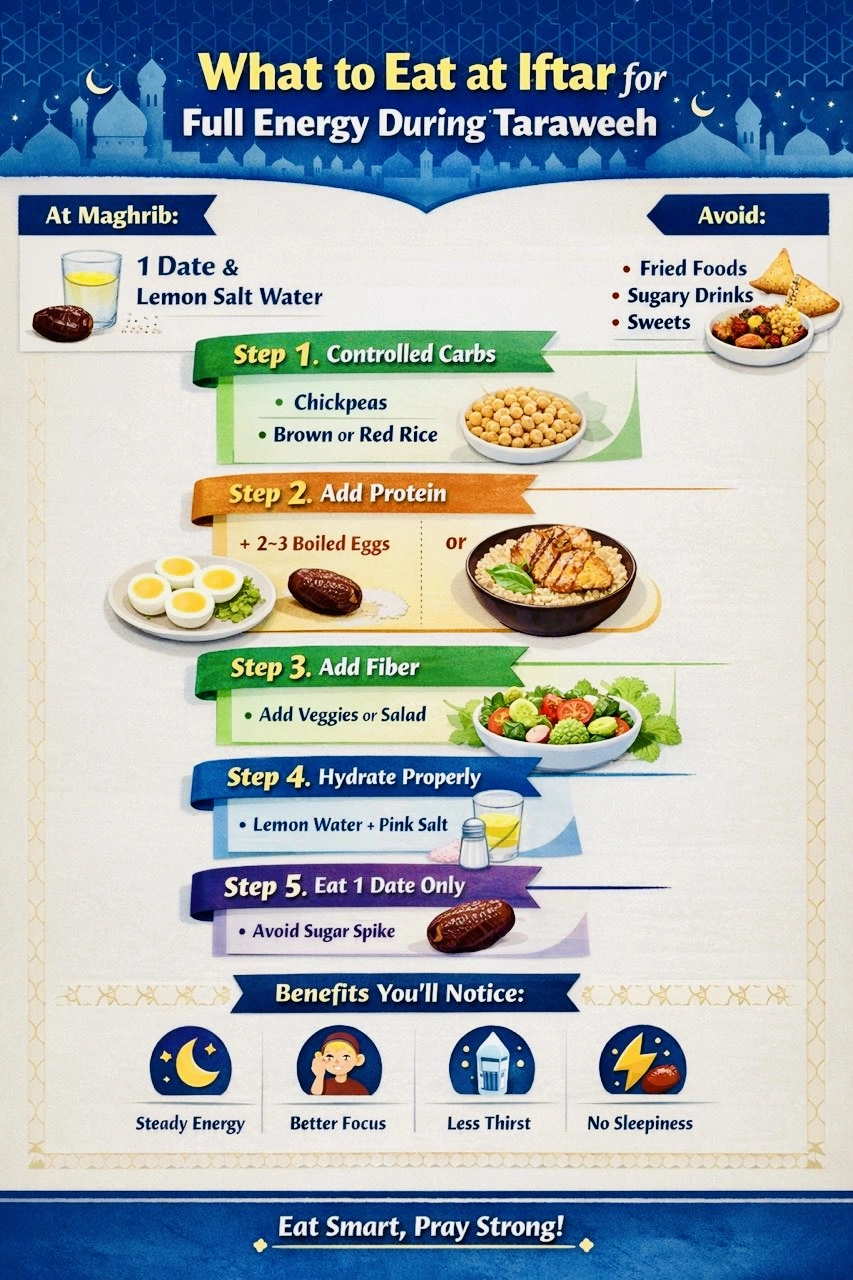
Ramadan is a time of spiritual elevation, discipline, and devotion. Yet many people experience something frustrating every night: they feel extremely tired during Taraweeh prayer. The problem is usually not lack of faith — it is lack of proper nutrition planning.
After fasting 12–16 hours, your body is metabolically sensitive. What you eat in the first 30–60 minutes of Iftar determines whether you feel:
- energetic and focused in prayer
or - sleepy, bloated, thirsty, and exhausted
This guide explains scientifically — but in simple terms — how to structure your Iftar meal so your energy lasts all the way through Taraweeh.
Why Most People Feel Tired in Taraweeh
Before discussing food, understand the real issue.
After fasting, your body has:
- low blood glucose
- depleted liver glycogen
- mild dehydration
- slowed metabolism
If you suddenly eat:
- fried food
- sugary drinks
- white flour
- desserts
Your blood sugar rises very fast → insulin spikes → sugar crashes within 60–90 minutes.
And that crash happens exactly during Taraweeh.
You don’t become sleepy because of prayer.
You become sleepy because of poor glucose stability.
The solution is simple:
Slow release energy instead of fast release energy.
The Perfect Iftar Structure for Taraweeh Energy
Your meal should contain four components:
- Complex Carbohydrates (primary energy source)
- Protein (stabilizes energy)
- Fiber (extends energy duration)
- Hydration & electrolytes (prevents fatigue)
We will go step-by-step.
1. Start With Controlled Carbohydrates (Not Sugar)
Why Carbs Matter
Your brain and muscles run on glucose. After fasting all day, your body urgently needs fuel.
But the type of carbohydrate determines the result:
| Type | Effect |
|---|---|
| Simple carbs (sugar, white bread, juice) | Quick energy → sudden crash |
| Complex carbs (whole grains, legumes) | Slow steady energy |
For Taraweeh, you need stable energy for 1.5–2 hours, not 10 minutes.
Best Complex Carbohydrates for Iftar
Option 1 — Chickpeas
- Low glycemic index
- Rich in magnesium
- Sustained glucose release
- Prevents dizziness
Option 2 — Brown / Red Rice
- Restores glycogen slowly
- Keeps muscles active
- Reduces fatigue
Why Not White Rice?
White rice digests quickly → insulin spike → sleepiness during 8th rakaat.
2. Add Protein to Prevent Energy Crash
After fasting, your body enters mild catabolism (breaking down tissue).
Protein stops that process and stabilizes blood sugar.
What Protein Does
- Slows carbohydrate absorption
- Prevents insulin spike
- Keeps brain alert
- Preserves muscle
- Extends satiety
Without protein, carbs alone will still make you tired.
Ideal Protein Sources
| Food | Benefit |
|---|---|
| Eggs | Fast recovery & steady alertness |
| Chicken | Long sustained energy |
| Fish | Light digestion + focus |
| Lentils | Plant protein + fiber combo |
Practical Combination Meals
If eating chickpeas
Make a balanced chickpea salad:
- Chickpeas
- 2–3 boiled eggs
- Olive oil
- Salt & lemon
Result: 2–3 hours stable energy
If eating rice
Add:
- 150–200g chicken or fish (men slightly more, women slightly less)
Result: prevents post-meal sleepiness
3. Add Fiber for Long-Lasting Stamina
Fiber is the hidden secret of Taraweeh energy.
Without fiber:
Energy lasts → 30–60 minutes
With fiber:
Energy lasts → entire prayer
How Fiber Works
Fiber slows digestion and glucose absorption.
This keeps blood sugar stable instead of fluctuating.
Best Fiber Choices
With Chickpea Meal
Add:
- tomato
- cucumber
- apple
With Rice & Protein
Add:
- spinach
- broccoli
- green vegetables
- salad
This single step alone dramatically reduces fatigue.
4. Hydrate the Smart Way
Dehydration is the second biggest reason people feel weak in Taraweeh.
After fasting all day your body lacks:
- water
- sodium
- potassium
Drinking plain water quickly often causes:
- bloating
- stomach heaviness
- frequent urination
Instead you need electrolyte hydration.
Ideal Ramadan Hydration Drink
Lemon water + 2 pinches pink salt (no sugar)
Why it works:
- restores minerals
- improves nerve function
- reduces dizziness
- prevents headache during prayer
Drink slowly over 10–15 minutes.
5. The Sunnah of Dates — But in Moderation
Breaking fast with dates is highly recommended.
But quantity matters.
Correct Practice
Eat one date only.
Why Not Many?
Dates contain natural sugar.
Multiple dates = sugar spike → insulin crash → sleepiness in 20 minutes.
One date:
- gently raises glucose
- activates digestion
- prepares stomach
Five dates:
- causes Taraweeh fatigue
6. Foods to Avoid Before Taraweeh
These foods are the main cause of prayer exhaustion.
Fried Foods
Examples:
- samosa
- pakora
- fried chicken
- paratha
Problem:
Heavy fat slows stomach emptying → blood diverted to digestion → brain fatigue
Sugary Drinks
Examples:
- soft drinks
- sweet juice
- syrup sharbat
Problem:
Fast glucose spike → crash during 6th–8th rakaat
Desserts
Examples:
- kunafa
- cake
- sweets
Problem:
Energy lasts only 20 minutes
The Perfect Iftar Plate (Example Meal Plan)
Step-by-Step Meal
Immediately at Maghrib
- 1 date
- lemon salt water
After 5–10 minutes
Choose ONE of these plates:
Plate Option A — Light & Highly Effective
- Chickpea salad
- 2–3 boiled eggs
- tomato & cucumber
- olive oil
Best for: long standing comfort
Plate Option B — Moderate Meal
- Brown/red rice
- grilled chicken or fish
- green vegetables
Best for: physically active people
After Taraweeh
You may eat heavier food later without affecting prayer.
How This Structure Keeps You Energetic
Your body energy system works in stages:
| Time After Iftar | Body Reaction |
|---|---|
| 0–15 min | glucose restoration |
| 30 min | glycogen refill |
| 60 min | stable energy |
| 90–120 min | sustained focus |
When you eat properly:
Your blood sugar curve stays flat.
When you eat poorly:
Spike → crash → yawning in Taraweeh
Common Mistakes People Make
Mistake 1: Eating Too Fast
This overloads insulin response.
Fix: Pause 5 minutes after date.
Mistake 2: Drinking Cold Sweet Drinks
Shocks stomach & causes fatigue.
Fix: room-temperature electrolyte water.
Mistake 3: Overeating Before Prayer
Blood flow goes to stomach instead of muscles.
Fix: eat light, complete meal.
Mistake 4: Skipping Protein
Causes weakness & shaking feeling.
Fix: always pair carbs with protein.
Benefits You Will Notice
Within 2–3 days of following this system:
- no sleepiness in Taraweeh
- improved concentration
- less thirst
- stable mood
- lighter standing
- stronger rukū & sujūd endurance
After 1 week:
- better digestion
- less bloating
- consistent nightly energy
Scientific Explanation (Simple Terms)
Energy during prayer depends on glycemic stability.
Bad Iftar:
High glycemic load → insulin surge → reactive hypoglycemia
Good Iftar:
Low glycemic load + protein + fiber → gradual glucose release
Your brain prefers steady glucose, not high glucose.
Final Iftar Strategy for Taraweeh Energy
Follow this structure every day:
- One date only
- Electrolyte water
- Complex carbs
- Add protein
- Add fiber
- Avoid fried & sugar
This creates steady energy for the entire prayer duration.
Conclusion
Feeling tired during Taraweeh is not unavoidable — it is nutritional.
Ramadan worship becomes easier when the body is supported correctly.
A light but balanced Iftar allows your body to serve your ibadah instead of fighting it.
The goal is not to feel full.
The goal is to feel stable.
By choosing slow-release foods, proper hydration, and balanced nutrients, you can stand comfortably in prayer every night.
Eat smart, pray strong, and let your nutrition support your worship throughout Ramadan.