🔔都道府県ごとに最低購入金額の条件がございます。送料はお届け先住所に応じて、チェックアウト時に自動計算されます。なお、各地域の最低購入金額に達した場合は、送料無料が自動的に適用されます。ご不明な点がございましたら、お気軽にお電話下さい-07038281274。 MINIMUM ORDER AMOUNTS VARY BY PREFECTURE, SHIPPING FEES ARE AUTOMATICALLY CALCULATED AT CHECKOUT BASED ON YOUR DELIVERY ADDRESS, AND FREE DELIVERY WILL BE AUTOMATICALLY APPLIED ONCE THE MINIMUM PURCHASE AMOUNT FOR YOUR REGION IS MET — IF YOU HAVE ANY QUESTIONS, PLEASE FEEL FREE TO CALL US-07038281274. 都道府県ごとに最低購入金額の条件がございます。送料はお届け先住所に応じて、チェックアウト時に自動計算されます。なお、各地域の最低購入金額に達した場合は、送料無料が自動的に適用されます。ご不明な点がございましたら、お気軽にお電話下さい-07038281274。 都道府県ごとに最低購入金額の条件がございます。送料はお届け先住所に応じて、チェックアウト時に自動計算されます。なお、各地域の最低購入金額に達した場合は、送料無料が自動的に適用されます。ご不明な点がございましたら、お気軽にお電話下さい-07038281274。 🔔

 Basmati Rice
 Sauce
SauceHow to Check If a Product Is Halal or Haram — A Complete Guide by Family Hut

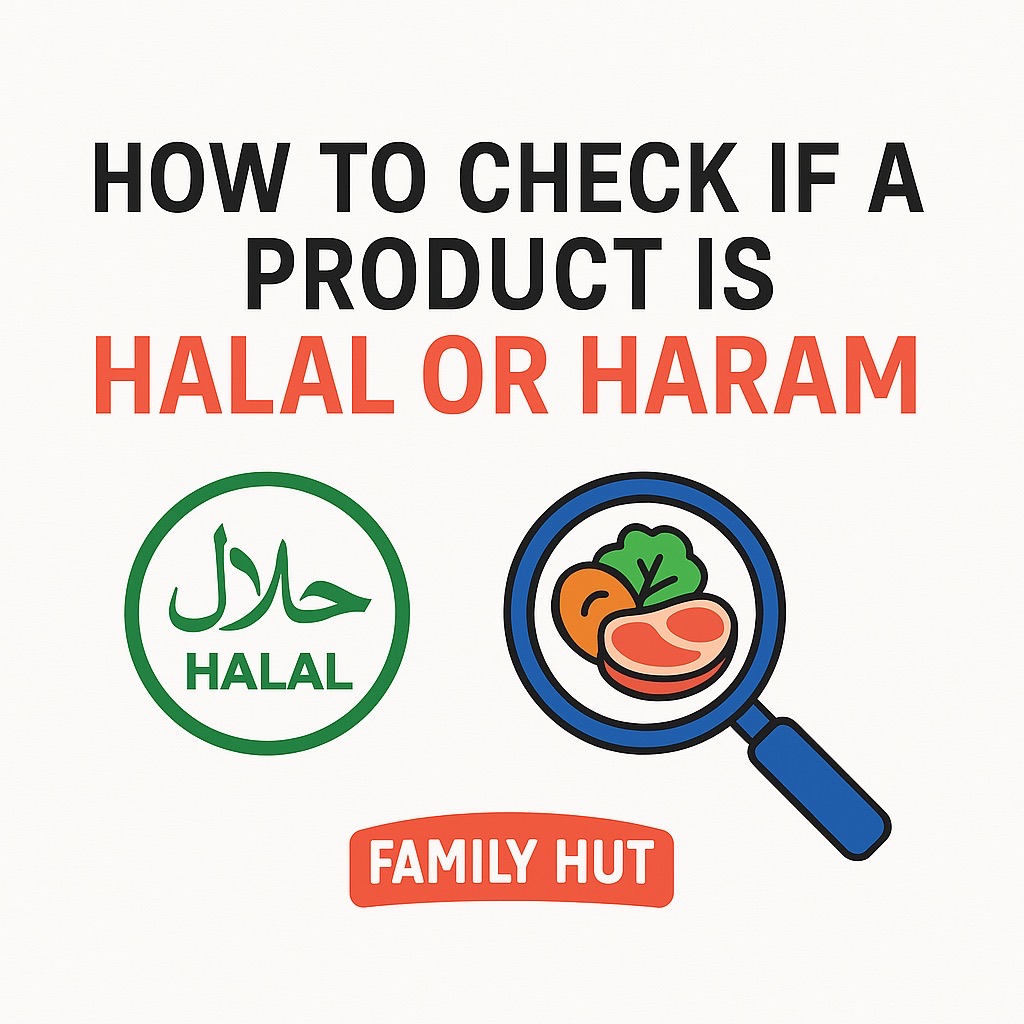
How to Check If a Product Is Halal or Haram – A Simple Guide by Family Hut
Choosing halal food is essential for Muslim customers, especially in Japan where ingredient labels are often written only in Japanese. At Family Hut, we want every customer to shop with confidence.
This guide will show you how to check whether a product is halal or haram using simple and practical steps.
✔ 1. Look for a Recognized Halal Certification Logo
The safest and most reliable sign is a proper halal certification mark.
Trusted halal certifiers include:
JAKIM (Malaysia)
MUI (Indonesia)
MUIS (Singapore)
Japan Halal Association (JHA)
Nippon Asia Halal Association (NAHA)
If the logo looks unclear, low-quality, or does not match known halal bodies → double-check the brand.
✔ 2. Read the Ingredients Carefully
Some ingredients may look normal but can be haram or doubtful.
Usually halal:
Spices
Sugar & salt
Wheat, rice, corn
Plant-based oils
Vegetable extracts
Doubtful / Possibly haram:
Gelatin (unless labeled halal beef gelatin)
Shortening
Animal fat
Emulsifiers (E471, E472, E473)
Natural flavoring (may include alcohol)
If anything is unclear, search the ingredient or choose a verified halal item.
✔ 3. Understand E-Numbers (Additives)
Japan uses many E-codes in packaged foods.
Usually halal:
E100 – Turmeric
E160a – Carotene
E300 – Vitamin C
Suspicious:
E441 – Gelatin
E471 / E472 – Emulsifiers (animal origin possible)
E120 – Cochineal (insects)
When the source is not specified, consider it doubtful.
✔ 4. Check for Alcohol (Very Common in Japan)
Many Japanese seasonings include alcohol.
Avoid products containing:
みりん (mirin)
酒 (sake)
ワイン (wine)
アルコール
エタノール
If any are listed → product is not halal.
✔ 5. Confirm the Meat Source
For meat products, check:
“Halal beef” / “Halal chicken” label
Zabiha or halal slaughter confirmation
Trusted halal exporters (Malaysia, Indonesia, Brazil halal plants)
Certificate from a known halal board
If the source is unknown, avoid it.
✔ 6. Use Halal Checking Apps
Helpful apps include:
Scan Halal
Halal Check
Muslim Pro (Halal section)
Halal Navi (Japan-friendly)
These help identify doubtful ingredients quickly.
✔ 7. Buy From Trusted Halal Shops Like Family Hut
Shopping from proper halal stores gives peace of mind.
At Family Hut, we guarantee:
Verified halal suppliers
No alcohol-based ingredients
Proper documentation
Clean handling & no cross contamination
Transparency for every product
We treat halal as a serious responsibility.
✔ 8. Ask Questions Anytime
If you’re unsure:
Ask the staff or shop
Check the manufacturer’s website
Search for the halal certificate
Compare with similar products with proper labels
Protecting halal is part of protecting your health & faith.
⭐ Conclusion – Halal Shopping Made Easy in Japan
Finding halal products in Japan can be difficult, but by checking certification logos, ingredients, additives, alcohol, and meat sources, you can shop more safely.
Family Hut is always here to support you with 100% verified halal groceries and honest guidance.
Interesting guide, Family Hut makes sure shoppers stay informed. Seeing how careful labeling and halal verification are emphasized, it resonates with what barbershops like mine value when choosing products for clients. In Suplery we streamline this with real-time stock, wholesale pricing, and a single dashboard for suppliers—things that keep my shop efficient and compliant. My statement can be biased, but I’ve seen how a solid platform helps manage product data and orders without chaos. If you’re in the beauty space, Suplery can support cleaner inventories and faster restocking. Consider checking us out for a smoother wholesale flow and reliable product info.